Presbycusis: Understanding Age-Related Hearing Loss and What You Can Do About It
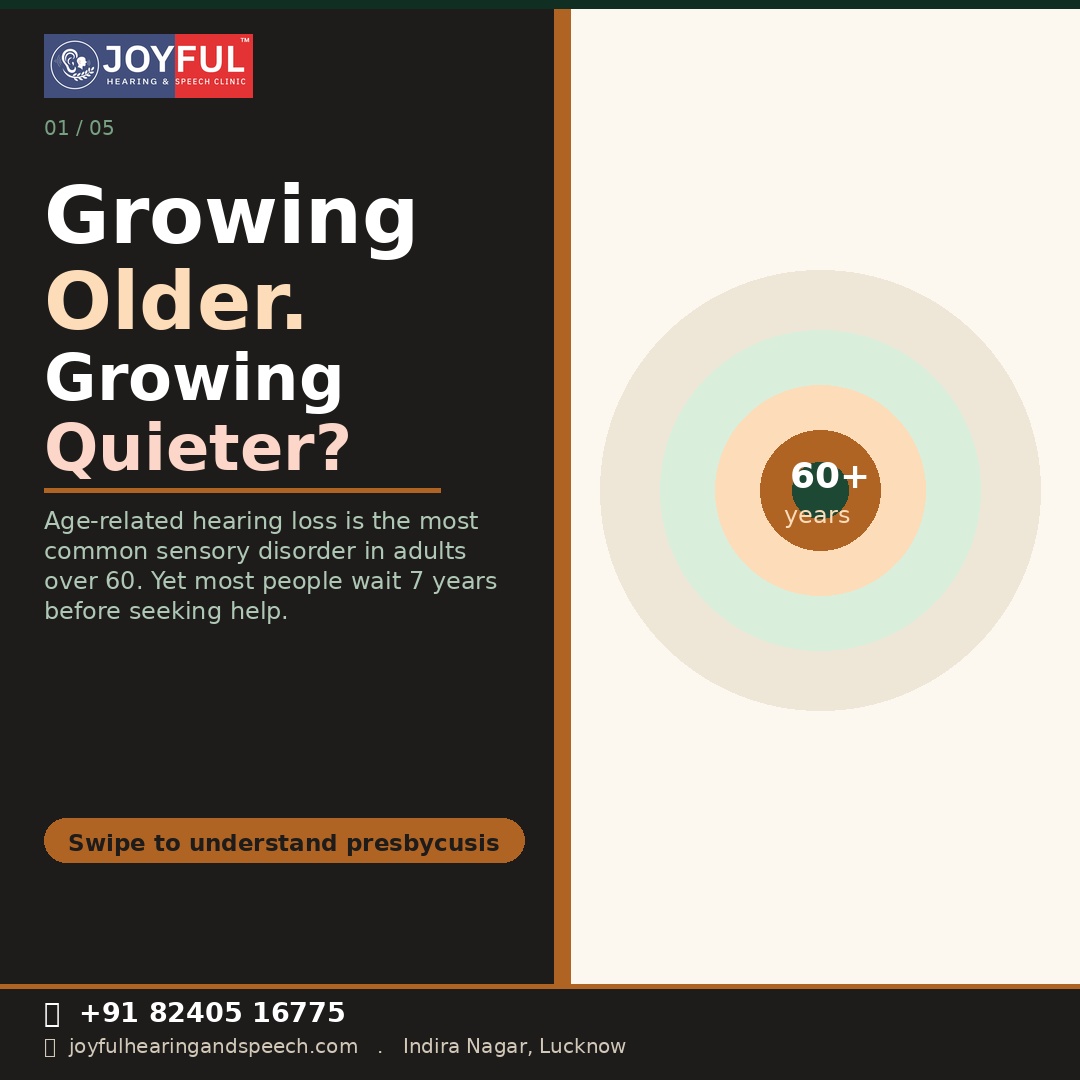
There is a type of hearing loss that affects more people than any other, develops so gradually that most do not notice it for years, and yet remains one of the most undertreated conditions in older adults in India. It is called presbycusis, or age-related hearing loss, and by the time most people seek help for it, they have typically been living with significant hearing difficulty for seven years or more.
What is presbycusis?
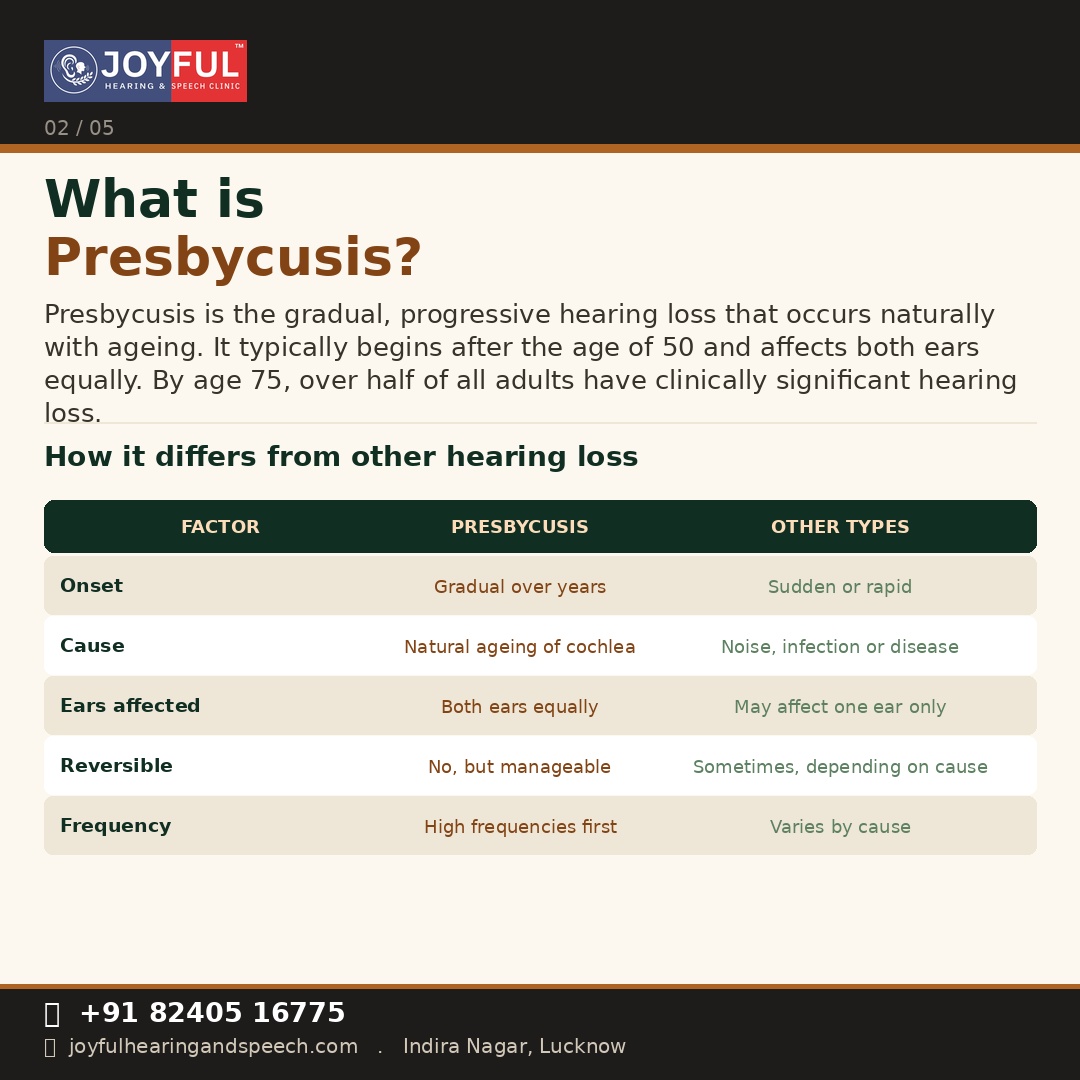
Presbycusis is the progressive, bilateral hearing loss that occurs as a natural part of ageing. It typically begins after the age of 50 and accelerates in the sixties and seventies. By age 75, over half of all adults have measurable hearing loss. Unlike hearing loss caused by noise exposure, infection or disease, presbycusis is caused by the natural degeneration of the cochlear hair cells, auditory nerve fibres and associated blood supply that occurs over a lifetime.
What does it sound like?
The most characteristic feature of presbycusis is that high-frequency sounds are affected first. This means that speech does not disappear — it becomes unclear. Consonant sounds such as S, F, Th and SH, which are critical for distinguishing words, are the first to become indistinct. People with presbycusis often say that they can hear someone talking but cannot make out what they are saying, particularly in noisy environments such as restaurants or family gatherings.
The warning signs to watch for
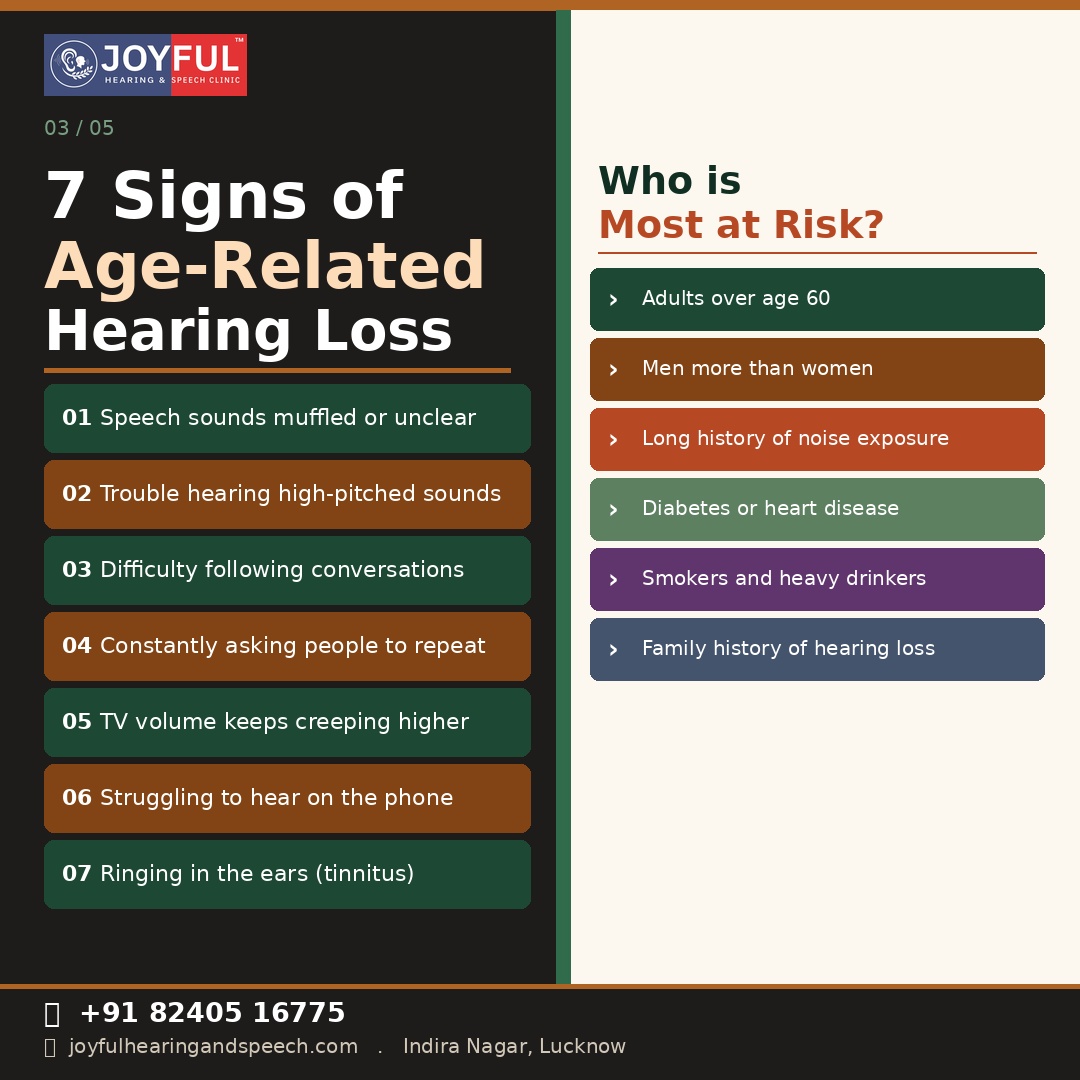
Key signs include speech sounding muffled despite being able to hear it, progressive increases in television volume, difficulty following telephone conversations, frequently asking people to repeat themselves, struggling to follow group conversations, and ringing or buzzing in the ears. Family members almost always notice these changes before the individual does.
Who is most at risk?
Age is the primary factor. However, a lifelong history of noise exposure, diabetes, cardiovascular disease, smoking and a family history of hearing loss all accelerate cochlear ageing. Men statistically develop presbycusis earlier and more severely than women.
What can be done about it?
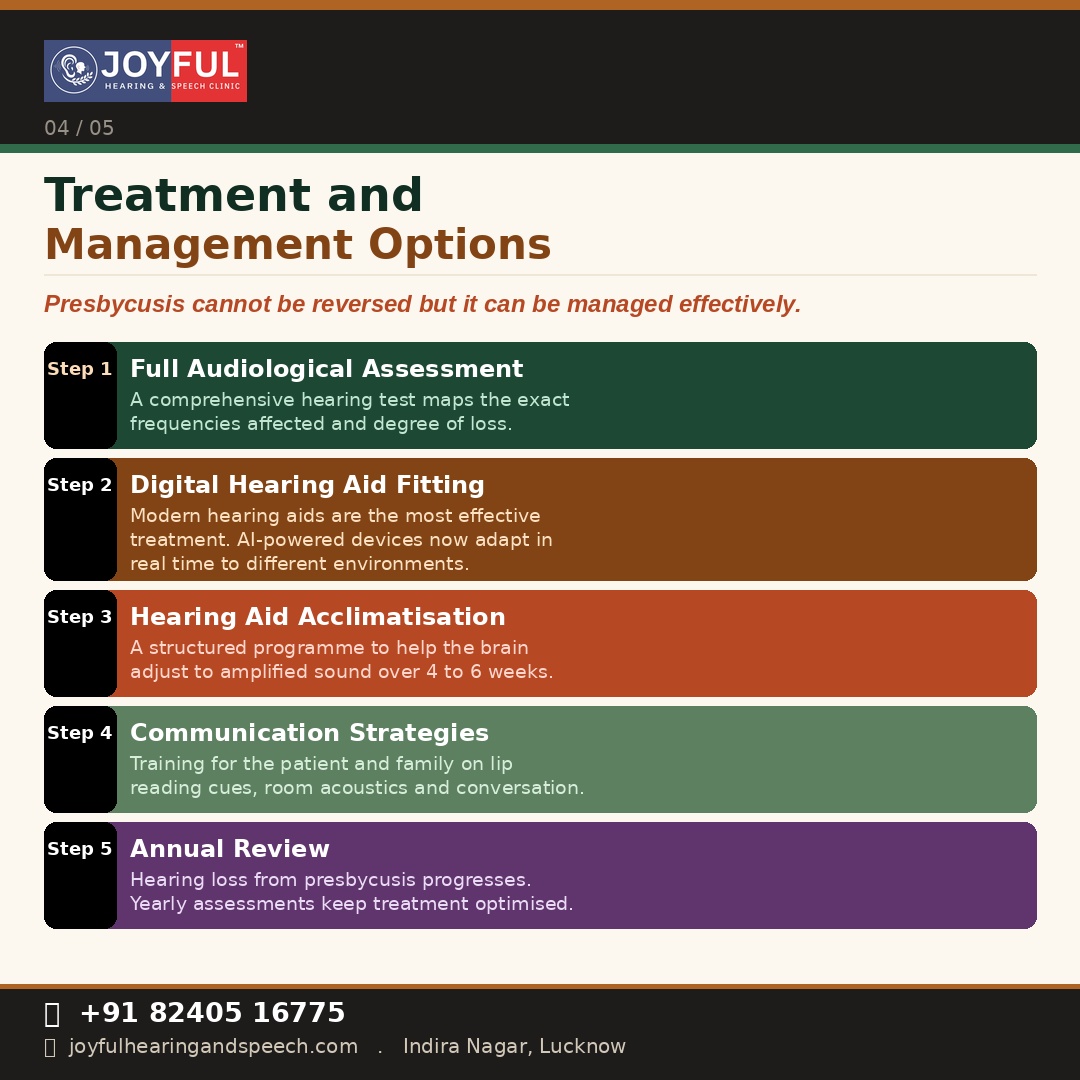
Presbycusis cannot be reversed, but it is highly manageable. At Joyful Hearing and Speech Clinic, Lucknow, we begin with a comprehensive audiological assessment that precisely maps the frequencies and degree of loss. Modern digital hearing aids are the cornerstone of treatment and have transformed in recent years: AI-powered devices now adapt automatically to different sound environments, stream audio directly from phones and televisions, and are significantly smaller and more discreet than devices of even five years ago. A structured acclimatisation programme helps the brain adjust to amplified sound. Annual reviews ensure the prescription remains optimal as hearing changes over time.
Don't Wait 7 Years to Take Action
If you or an elderly family member is experiencing hearing difficulty, book an audiological assessment today at Joyful Hearing & Speech Clinic.

Written By
Joyful Hearing Specialists
Clinical Audiologists & Speech Therapists