
Diabetes and Hearing Loss: The Silent Connection Your Doctor May Not Have Told You

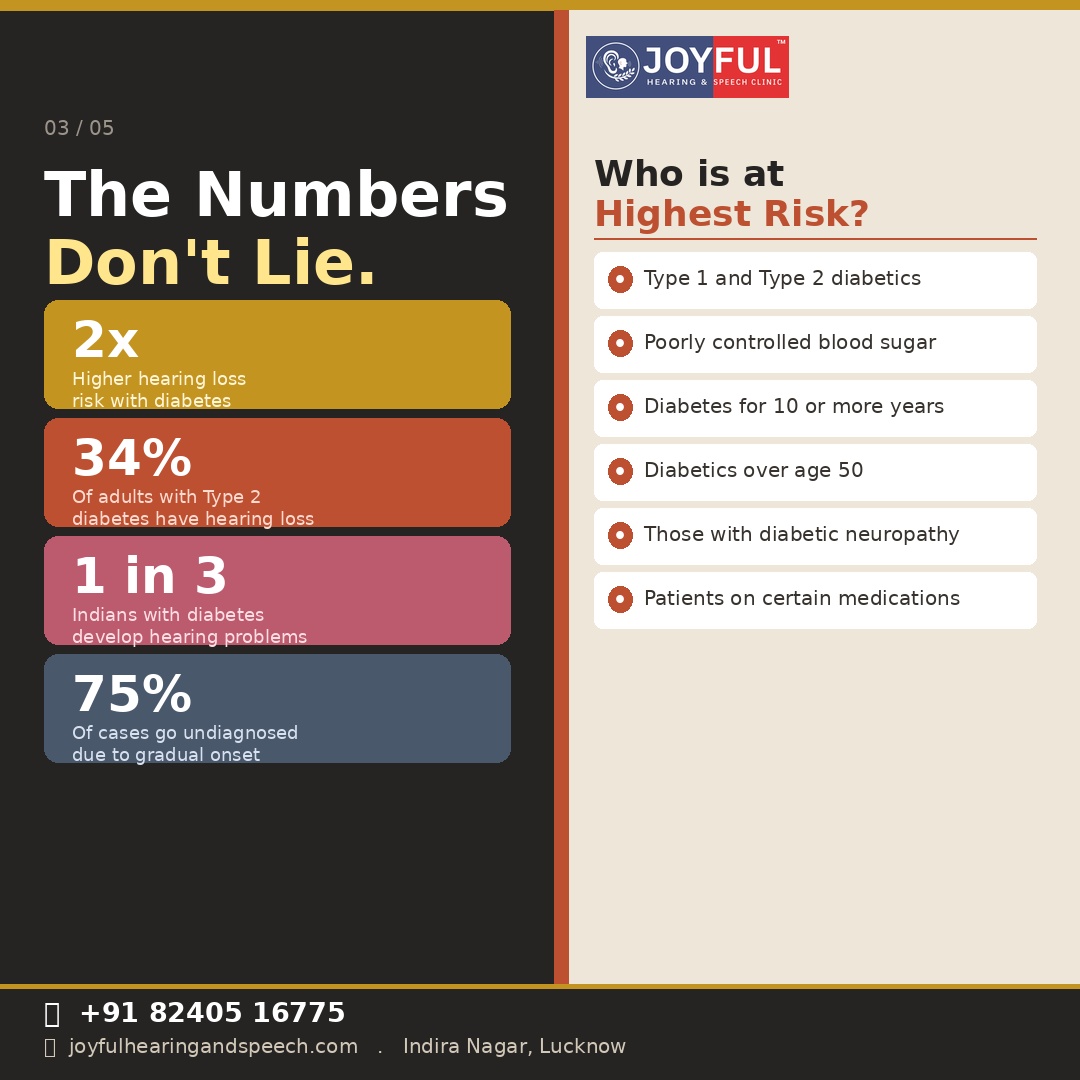
Over 100 million Indians are living with diabetes. Most are aware of the risks to their eyes, kidneys, and feet. Very few are told about the ears. Research published by the US National Institutes of Health confirms that people with diabetes are twice as likely to develop hearing loss as those without it, making diabetes one of the most significant and least discussed risk factors for auditory damage in India today.
How does diabetes damage hearing?
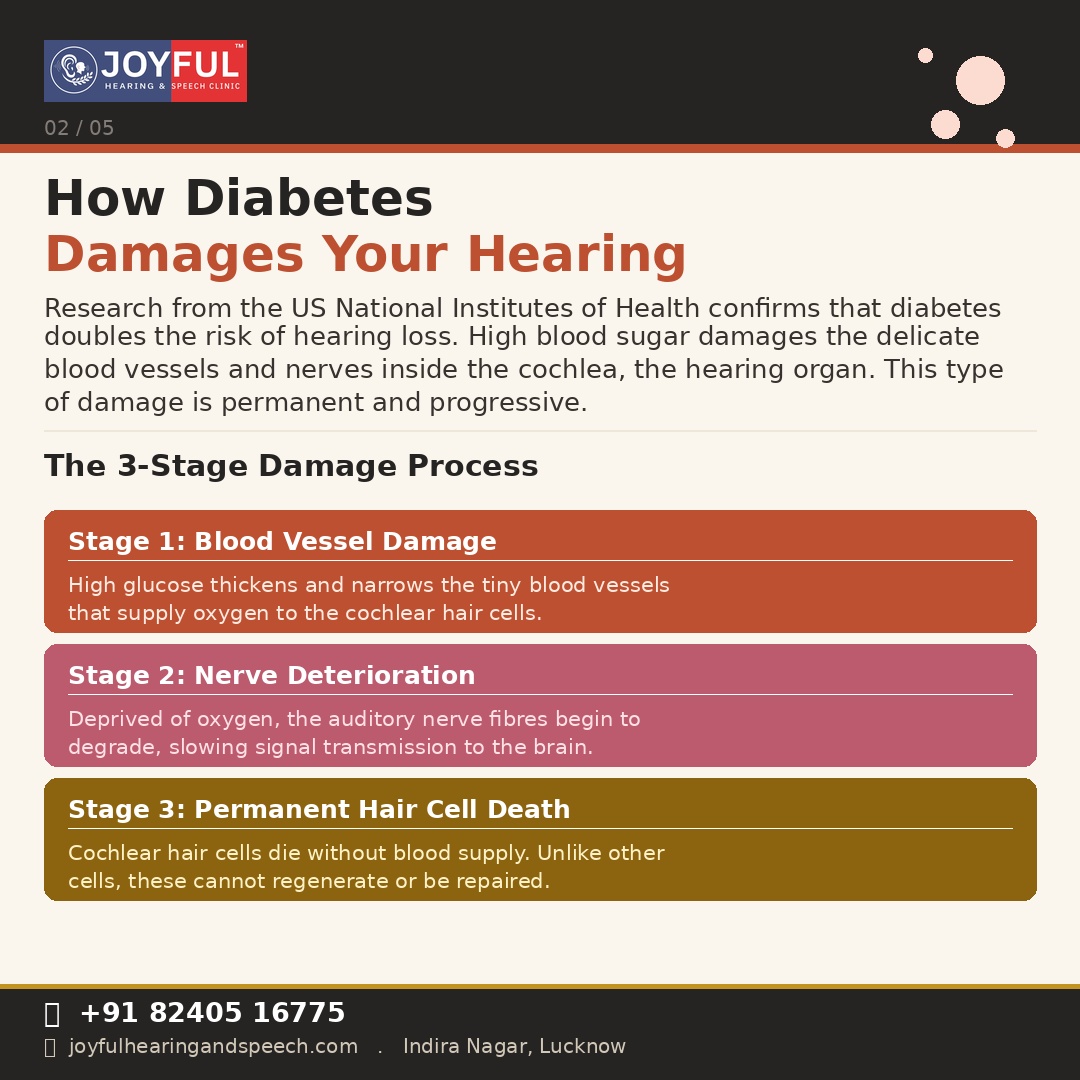
The cochlea, the hearing organ inside the inner ear, is lined with thousands of microscopic hair cells that convert sound vibrations into signals for the brain. These hair cells are entirely dependent on a rich blood supply through tiny capillaries. High blood sugar levels, particularly over prolonged periods, cause a process called microvascular damage: the small blood vessels thicken, narrow and lose flexibility, reducing oxygen delivery to the cochlea. Without adequate oxygen, the hair cells deteriorate and eventually die. Since cochlear hair cells cannot regenerate, this damage is permanent. The auditory nerve is similarly vulnerable to the effects of diabetic neuropathy, further compounding hearing decline.
Why it so often goes unnoticed
Unlike a sudden infection or injury, diabetes-related hearing loss develops gradually over years. Most people compensate unconsciously, turning up the television, asking people to repeat themselves, or withdrawing from social situations without connecting these changes to their blood sugar levels. By the time hearing loss is formally diagnosed, significant cochlear damage may already have occurred.
Who faces the highest risk?
Individuals with poorly controlled blood glucose, those who have had diabetes for ten years or more, older diabetics, and patients with existing diabetic neuropathy or retinopathy face the greatest risk of auditory decline. The type of diabetes is less important than the degree of glycaemic control and the duration of exposure to high glucose levels.
The symptoms to watch for
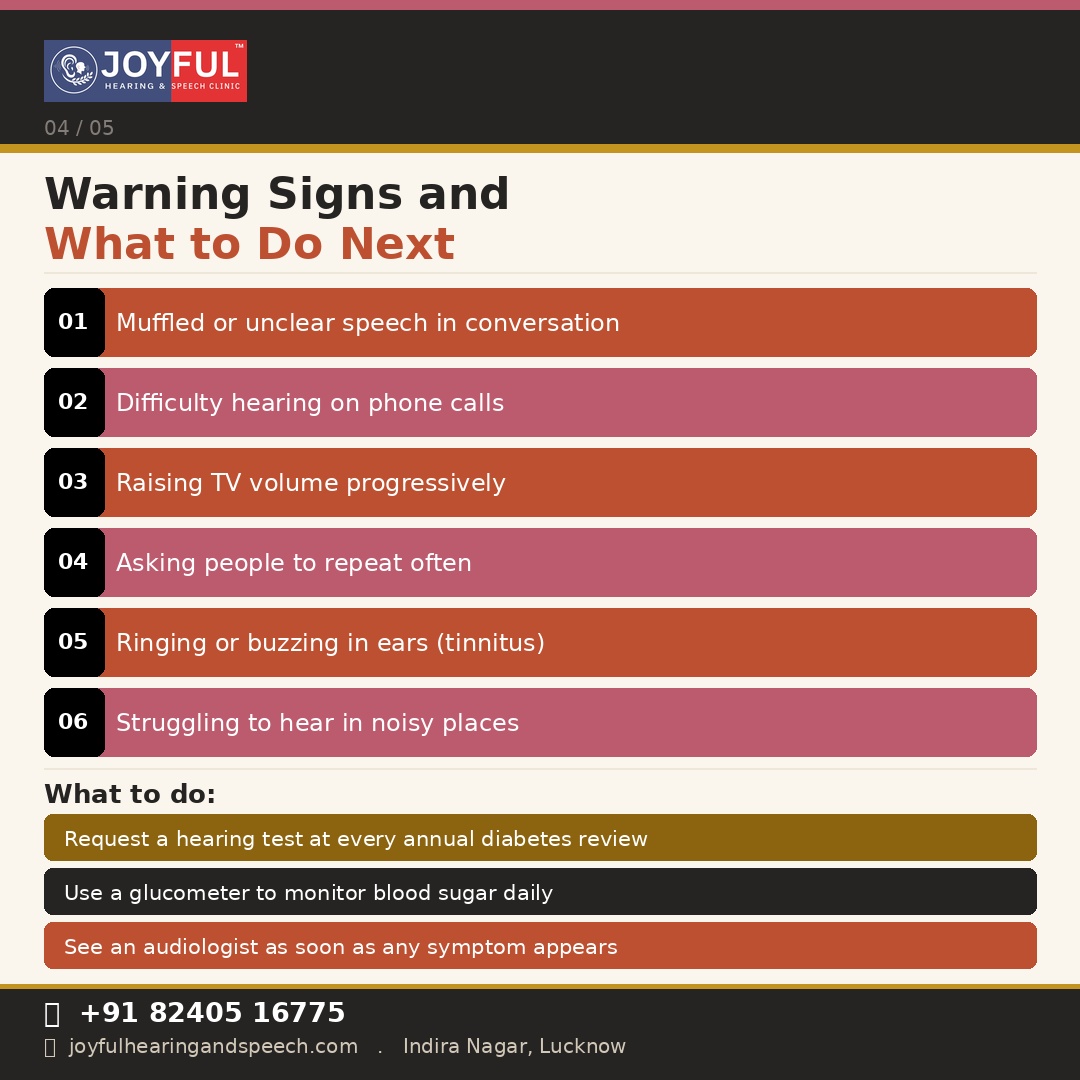
Muffled speech in conversation, difficulty hearing on telephone calls, progressive increases in television volume, frequent requests for repetition, and tinnitus are all early indicators that hearing loss may be developing. Struggling to follow conversation in restaurants or other noisy environments is particularly common and often dismissed as normal ageing.
What to do if you have diabetes
At Joyful Hearing and Speech Clinic, Lucknow, we strongly recommend that every adult with diabetes includes an annual audiological assessment as part of their routine health monitoring, alongside blood sugar reviews and eye checks. Early detection allows timely intervention with hearing aids, which are highly effective at compensating for the type of hearing loss associated with diabetes.

Schedule Your Hearing Check Today
If you or a family member has diabetes, include an annual hearing assessment in your healthcare routine.

Written By
Joyful Hearing Specialists
Clinical Audiologists & Speech Therapists